Peach Buttermilk Biscuits
Prep Time: 20 minutes | Chill Time: 20 minutes | Bake Time: 18–20 minutes | Makes: 10–12 biscuits
I need to tell you something about these biscuits. Something important.
I have made a lot of biscuits in my life. Classic Southern buttermilk biscuits, drop biscuits, cheese biscuits, herb biscuits — I have been through them all. And I thought I had a pretty good handle on what a biscuit could be. Flaky, buttery, tender. That was the goal. That was the dream.
And then I made these. Peach Buttermilk Biscuits. And I genuinely stood at my kitchen counter at 8 in the morning, in my pajamas, eating one warm from the oven — and thought: this is it. This is the one.
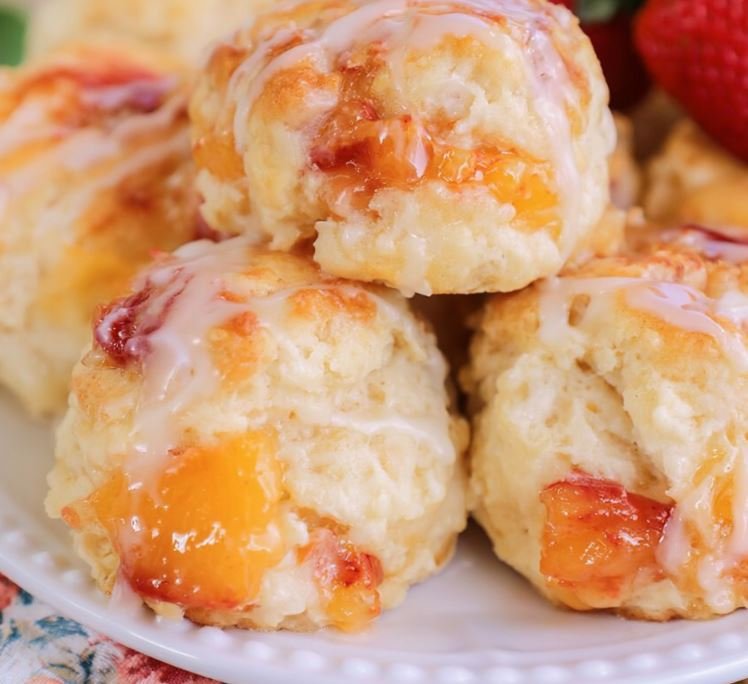
The biscuits are everything a great Southern biscuit should be — flaky layers that pull apart in your fingers, a buttery richness in every bite, that subtle tang from the cold buttermilk that makes them taste more complex than a biscuit has any right to be. And then, folded into every layer, are little pieces of sweet, juicy peach that soften as they bake and create these pockets of warm, jammy fruit that make each bite taste like the very best day of summer. All of it finished with a drizzle of simple vanilla glaze that sets into a thin, sweet shell over the warm tops.
I am not exaggerating when I say these disappear within minutes of hitting the cooling rack.
Why This Recipe Exists
Honestly? Peach season. There is a very short window — usually July through early September depending on where you live — when fresh peaches are genuinely extraordinary. Sweet, fragrant, dripping with juice, nothing like those hard, flavorless things that show up in January pretending to be peaches. And every year, when that window opens, I try to put peaches in as many things as humanly possible before it closes again.
Peach cobbler, obviously. Peach jam. Peach ice cream. Peach salsa if I am feeling adventurous. But these biscuits — these are the thing I look forward to most. Because there is something about a ripe, sweet peach tucked inside a warm, flaky buttermilk biscuit that feels like the definition of Southern summer in food form.
And here is the thing — this recipe also works beautifully with frozen peaches, which means you can make it in February when the world is gray and cold and you need a reminder that summer exists. No one has ever been sad eating a warm peach biscuit in February. It is scientifically impossible.
The Secrets to a Perfect Biscuit
Before we get into the recipe, can we talk for a second about what actually makes a biscuit great? Because I spent years making decent biscuits before I understood what separated decent from genuinely incredible, and once you know — you cannot unknow it.
- Everything must be cold. And I mean everything. Cold butter. Cold shortening. Cold buttermilk. The colder your fat, the more dramatically it steams in the hot oven, and those little bursts of steam are what create the distinct, flaky layers that make a great biscuit so satisfying. Warm fat just melts into the flour and you end up with something dense and bread-like instead of light and layered. If your kitchen is warm, freeze your butter for 15 minutes before grating it into the flour. Yes, grating it. More on that below.
- Do not overwork the dough. This is the rule that matters most and the one that gets broken most often. Overworked biscuit dough develops too much gluten and gives you tough, dense biscuits that chew like bread. Mix just until the dough comes together — some dry streaks are actually fine. They disappear in the oven. Stop while it still looks a little rough.
- Remove moisture from the peaches. This is the step that most first-timers skip, and it makes a real difference. Peaches release a lot of juice when they bake, and too much liquid in the dough makes soggy, heavy biscuits that do not rise properly. Pat your diced peaches dry. Really dry. Do it twice if you need to. Your biscuits will thank you.
- Do not twist the cutter. When you cut your biscuits, press straight down and pull straight up. Twisting the cutter seals the edges of the dough and prevents the biscuits from rising properly. This is one of those small details that makes a visible difference in the final height and flakiness of your biscuits.
Ingredients
For the Biscuits
- 2 ½ cups (315g) all-purpose flour, plus more for dusting
- 1 tbsp baking powder
- ½ tsp baking soda
- 1 tbsp powdered sugar
- 1 tsp fine salt
- ½ cup (115g) unsalted butter, frozen and grated (or very cold, cut into small cubes)
- 2 tbsp cold shortening, cut into small pieces
- ¾ cup (180ml) cold buttermilk, plus more for brushing
- 1 cup fresh peaches, peeled and finely diced (or frozen, thawed and well-drained)
- 1 tsp cinnamon (optional but highly recommended)
For the Vanilla Glaze
- 1 cup powdered sugar, sifted
- 2 to 3 tbsp whole milk or heavy cream
- ½ tsp pure vanilla extract
- 1 tbsp unsalted butter, melted
For Brushing
- 2 tbsp unsalted butter, melted
- 1 egg + 1 tbsp milk, whisked together for egg wash (optional, for extra golden tops)
Instructions
Step 1 — Prep the Peaches
This is the step that makes or breaks peach biscuits, so do not rush it. Whether you are using fresh or frozen peaches, peel and dice them into very small pieces — think small enough to fit into every bite without creating big, wet pockets of fruit that make the dough soggy.
Spread the diced peaches on a double layer of paper towels. Cover with another paper towel and press firmly to absorb the juice. Let them sit for 5 minutes, then press again. If they still seem very wet, give them one more round. You want them dry enough that they are not visibly juicy — the dough picks up plenty of peach flavor even without the extra moisture.
Set the dried peaches aside and put your butter in the freezer if it is not already there.
Step 2 — Mix the Dry Ingredients
In a large bowl, whisk together the flour, baking powder, baking soda, powdered sugar, salt, and cinnamon until fully combined. The powdered sugar is a small addition that adds a subtle sweetness to the dough without making the biscuits taste like a dessert — it is the right amount for a fruit biscuit.
Step 3 — Work in the Fat
Here is where the magic starts. Take your frozen butter and grate it directly into the flour mixture using the large holes of a box grater. Work quickly — the heat from your hands transfers to the butter faster than you think. Toss the grated butter with the flour as you go to coat each piece. Add the cold shortening pieces. Using your fingertips, work the fat into the flour with a light, quick rubbing motion until the mixture looks like coarse crumbs with some pea-sized pieces remaining. Some bigger butter pieces are completely fine — they create extra flakiness.
This whole step should take about 2 minutes. If the butter starts to feel soft or greasy, pop the whole bowl in the freezer for 5 minutes before continuing.
Step 4 — Add the Peaches and Buttermilk
Add the dried, diced peaches to the flour mixture and toss gently to coat them in flour. This light flour coating helps them distribute evenly through the dough and prevents them from sinking to the bottom.
Make a well in the center of the flour mixture and pour in the cold buttermilk. Using a fork or a rubber spatula, stir from the center outward with a light hand until the dough just begins to come together into a shaggy mass. It will look rough and slightly uneven. That is perfect. Stop stirring the moment it comes together — do not try to make it smooth.
Step 5 — Shape the Dough
Turn the dough out onto a well-floured surface. Using floured hands, gently pat the dough into a rough rectangle about 1 inch thick. Do not roll it with a rolling pin — rolling compresses the layers. Patting is gentler and preserves the flakiness.
Fold the dough in half over itself, rotate 90 degrees, and pat it back out to 1 inch thick. Repeat this fold-and-pat three times total. This folding technique — borrowed from laminated pastry — is what creates those distinct, beautiful layers you can see when you pull a biscuit apart. Each fold adds more layers.
After the final fold, pat the dough to about ¾ to 1 inch thickness. Using a sharp 2½ to 3-inch round biscuit cutter dipped in flour, cut out the biscuits by pressing straight down and pulling straight up — no twisting. Place the cut biscuits on a parchment-lined baking sheet, sides barely touching. Gather the scraps, gently press together, and cut a few more.
Step 6 — Chill and Preheat
Here is the step most people skip, and I understand why — the biscuits are ready and you just want to bake them. But 20 minutes in the refrigerator or freezer right before baking makes a genuinely noticeable difference. The chilled fat creates more steam in the hot oven, which means taller, flakier biscuits with better rise and better layers. Set the baking sheet in the fridge and preheat your oven to 450°F (230°C) while you wait. You are not waiting long, and it is worth it.
Step 7 — Brush and Bake
When the oven is hot, pull the biscuits from the fridge. Brush the tops with either the egg wash for a beautiful golden shine, or plain buttermilk for a slightly softer, more matte finish. Both are great — it really comes down to what look you prefer.
Bake on the top rack of the oven for 18 to 20 minutes, until the tops are deep golden brown and the biscuits sound hollow when you tap the top. Do not underbake — pale biscuits are sad biscuits. Pull them when they are genuinely golden.
As soon as they come out of the oven, brush the tops generously with the melted butter. It soaks right in and adds a richness and shine that is completely irresistible.
Step 8 — Make the Glaze and Finish
While the biscuits cool for about 5 minutes, whisk together the powdered sugar, melted butter, vanilla extract, and milk until the glaze is smooth and pourable. Start with 2 tablespoons of milk and add more a few drops at a time until you reach a consistency that drizzles easily but is not watery.
Drizzle the glaze generously over the warm biscuits. Let it set for a few minutes — it will firm up slightly and create that beautiful, crackly sweet shell on top. Then drizzle a second coat for extra sweetness and a more finished bakery look.
Serve warm. Always warm.
Recipe Notes
- Freeze the butter, then grate it. Frozen butter grated directly into the flour is the single biggest upgrade you can make to your biscuit game. It distributes the fat more evenly and keeps it colder longer than cubed butter, which means flakier, more layered biscuits every single time.
- Dry the peaches thoroughly. Wet peaches = wet dough = biscuits that do not rise properly and taste heavy. Take the extra two minutes to really dry them on paper towels. It changes the final result significantly.
- Cold, cold, cold. I cannot say it enough. Every ingredient that touches the dough should be as cold as possible. If it is summer and your kitchen is warm, work quickly, and do not hesitate to chill the dough partway through if it starts feeling soft.
- Do not twist the biscuit cutter. Press straight down, pull straight up. Twisting seals the edges and prevents the biscuits from rising to their full potential. It is a small thing that makes a real difference in height and flakiness.
- The fold-and-pat technique is important. Those three folds before the final cut are what create the visible layers inside the biscuit. You can skip them and still get a good biscuit — but you will not get those gorgeous, distinct layers that make a great biscuit so satisfying to pull apart.
- Biscuits touching on the baking sheet is intentional. Placing them close together — sides barely touching — means they rise taller instead of spreading sideways. Think of it as the biscuits leaning on each other for support. If you want crispier sides all around, space them 2 inches apart.
- Fresh is best, but frozen works. Fresh ripe peaches in peak season are incomparable. But properly thawed and dried frozen peaches make a genuinely wonderful biscuit and are available year-round. Canned peaches, well-drained and patted very dry, work in a pinch — but fresh or frozen are the better choices.
Variations
Peach and Brown Sugar Streusel Biscuits — Before baking, top each biscuit with a small pinch of streusel made from 3 tablespoons flour, 2 tablespoons cold butter, 2 tablespoons brown sugar, and ¼ teaspoon cinnamon mixed into crumbles. The streusel bakes into a golden, crunchy topping that adds another layer of texture and sweetness that is absolutely spectacular.
Peach and Cream Cheese Biscuits — Place a small cube of cold cream cheese in the center of each biscuit before folding the dough over it. The cream cheese melts as it bakes and creates a creamy, tangy center that pairs beautifully with the sweet peach. It feels indulgent. It is indulgent. Worth it.
Cinnamon Peach Biscuits — Double the cinnamon in the dough and add ½ teaspoon of nutmeg. Swap the vanilla glaze for a cinnamon glaze by stirring ½ teaspoon of cinnamon into the powdered sugar before adding the milk. This version tastes like peach cobbler in biscuit form and is my top choice for a cool fall morning.
Peach and Bourbon Glaze — Add 1 tablespoon of good bourbon to the glaze in place of one tablespoon of milk. The warmth of the bourbon against the sweet peach is a combination that adults will absolutely lose their minds over. Serve these at your next brunch and accept the compliments graciously.
Lemon Peach Biscuits — Add 1 teaspoon of fresh lemon zest to the dough and use fresh lemon juice in place of the milk in the glaze. The citrus brightness sharpens the peach flavor and makes these feel lighter and more refreshing — perfect for a summer morning when you want something that tastes like sunshine.
Drop Peach Biscuits — If you want the flavor without any of the shaping and cutting, add an extra 3 to 4 tablespoons of buttermilk to make a stickier dough, and drop generous spoonfuls onto the baking sheet using a large cookie scoop. They will be slightly less layered but just as delicious — and the whole process takes about 5 minutes. Perfect for those mornings when you want biscuits and you want them now.
What to Serve With Them
These biscuits are genuinely complete on their own — warm, sweet, glazed, perfect. But if you are building a full Southern breakfast or brunch spread:
- A scoop of vanilla ice cream alongside a warm biscuit turns this into a dessert that rivals any peach cobbler you have ever had
- Softly whipped cream with just a touch of vanilla and a pinch of cinnamon
- A side of crispy bacon or country ham for a sweet-savory balance that is deeply Southern and deeply satisfying
- Fresh sliced peaches on the side during peak season — because more peach is always the right answer
- Strong black coffee, sweet tea, or fresh-squeezed orange juice to complete the morning
Make-Ahead Tips
- Make the dough and cut the biscuits the night before. Place the cut, unbaked biscuits on a parchment-lined baking sheet, cover tightly with plastic wrap, and refrigerate overnight. Pull them out while the oven preheats and bake as directed. They actually benefit from the extra chill time.
- Freeze the unbaked biscuits. Place cut biscuits on a baking sheet and freeze until solid — about 1 hour. Transfer to a freezer bag and store for up to 3 months. Bake from frozen at 450°F, adding 5 to 7 extra minutes to the bake time. No need to thaw. This is genuinely one of the best things you can keep in your freezer.
- Make the glaze ahead. Store it covered at room temperature for up to 2 days. Give it a stir and add a drop of milk to loosen if it has thickened before drizzling.
Storage
Room temperature: Store baked biscuits in an airtight container at room temperature for up to 2 days. They are best within the first few hours of baking, while the glaze is still set and the layers are still distinct.
Refrigerator: Because of the fresh fruit in the dough, I recommend refrigerating any biscuits that will not be eaten the same day. Store in an airtight container for up to 3 days. Reheat in a 350°F oven for 5 minutes or in the microwave for 15 to 20 seconds. They come back to life beautifully — especially in the oven, which crisps up the exterior just a little and warms the inside back to that perfect soft, pillowy texture.
Freezer: Freeze baked, unglazed biscuits for up to 2 months, wrapped individually. Reheat from frozen in a 350°F oven for 10 to 12 minutes until warmed through. Glaze after reheating for the freshest possible finish.
One last thing. If you have access to fresh Georgia peaches, or any truly ripe local peaches in season — please use them for this recipe. I am not saying frozen peaches are bad, because they are not. But a ripe summer peach in a warm, buttery biscuit, drizzled with vanilla glaze, eaten at a kitchen table on a Saturday morning? That is one of those small, simple, perfect things in life that is worth going out of your way for.
Did you make these Peach Buttermilk Biscuits? Leave a comment below and tell me what kind of peaches you used! And if you ate three of them before they were even fully glazed — I completely understand and I will never judge you for it. Tag us on social media. We love seeing your beautiful, golden, peach-filled mornings. 🍑🧈